SpongeBob, Waldner and Taleb: Table Tennis Lessons
In this post8 sections
Quick question: what kind of sponge is SpongeBob?
If you answered “a kitchen sponge”, you’re in good company. Yellow, square, full of little holes — the very image of the sponge next to the sink. And that’s exactly how I used Bob in a text I wrote in 2021 that only circulated in WhatsApp groups: as a symbol of resilience. Squashed, he always bounces back to his original shape. “Be a SpongeBob player,” I said.
Five years later, rereading that text, I realized I had gotten two things wrong.
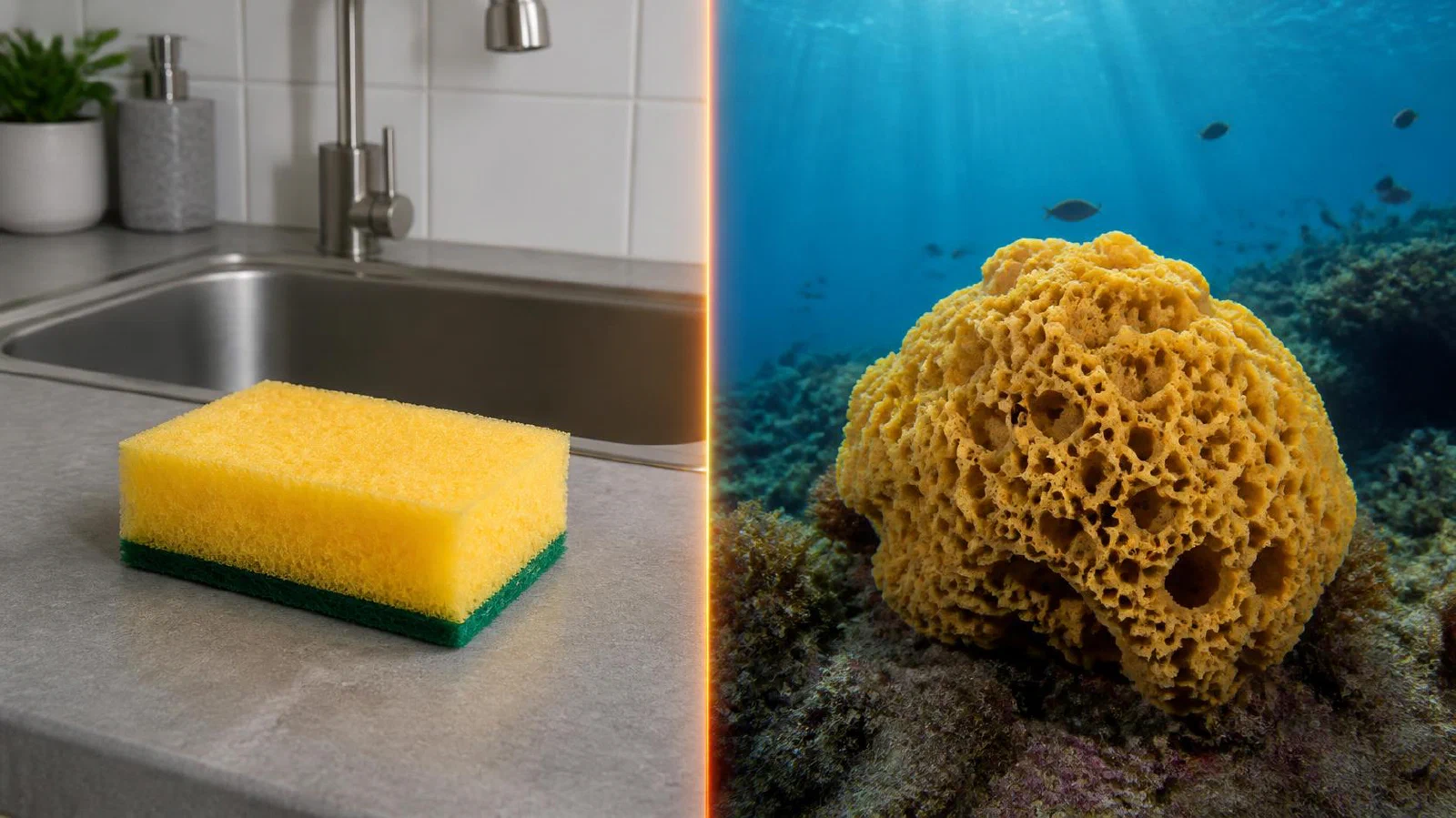
The first: Bob is not a kitchen sponge. He lives in a pineapple at the bottom of the sea. He’s a sea sponge — and not by accident: the creator of the cartoon, Stephen Hillenburg, was a marine biologist before becoming an animator. Hold on to that, because it changes everything at the end of this text.
The second: resilience is not the goal. It’s the middle of the road.
This post is a rewrite of that old text — now with the help of an author who changed the way I think about training, competition and growth: Nassim Nicholas Taleb.
TL;DR: resilience, going back to normal after pressure, isn’t enough: the goal is to come out better than you went in, which is what Nassim Taleb calls antifragility. Stress in the right dose, with recovery, makes you stronger; changing everything out of anxiety (switching rubbers after every loss, tinkering with technique before a tournament) is iatrogenics, the remedy turning into the disease. It all comes down to the 8 to 10 seconds between points, and you can train it: there’s a table to find out which level you’re at, training ideas, Waldner in 1997 and the truth about SpongeBob.
Fragile, resilient, antifragile: a recap
In May, when China lost two matches in the group stage of the World Team Championships and still left London as champions, I wrote about it here on the blog: The Antifragile China: From Chaos to the World Title. If you haven’t read it, it’s worth it — but here is the three-line summary:
- Fragile is what breaks under pressure.
- Resilient (or robust) is what withstands the shock and goes back to the same state.
- Antifragile is what comes out of the shock better than it went in.
The idea that hit me hardest in the book is simple and uncomfortable: the opposite of fragile is not resilient. Taleb uses the example of a package sent by mail with the label “fragile — handle with care”. The opposite of that would not be a package labeled “I don’t care how you handle me” (that’s the robust one). The opposite would be “please, mistreat me”. Something that gets better when it’s shaken.
In my 2021 text, I defined resilience as “going back to your natural state after suffering pressure”. And right after that, I asked the athlete to change, leave the comfort zone, adapt. I was asking for antifragility without having the word for it. Going back to your natural state is great — but whoever only returns to the same place after every loss is, deep down, standing still.
A little more Taleb
Taleb is a Lebanese-American essayist and former financial trader who has spent his life studying uncertainty, risk and chance. He is the author of The Black Swan and Antifragile (2012), the book where everything I’m using here comes from. Nothing in it is about sport — and, at the same time, almost all of it is useful for anyone who trains.
Damocles, Phoenix and Hydra
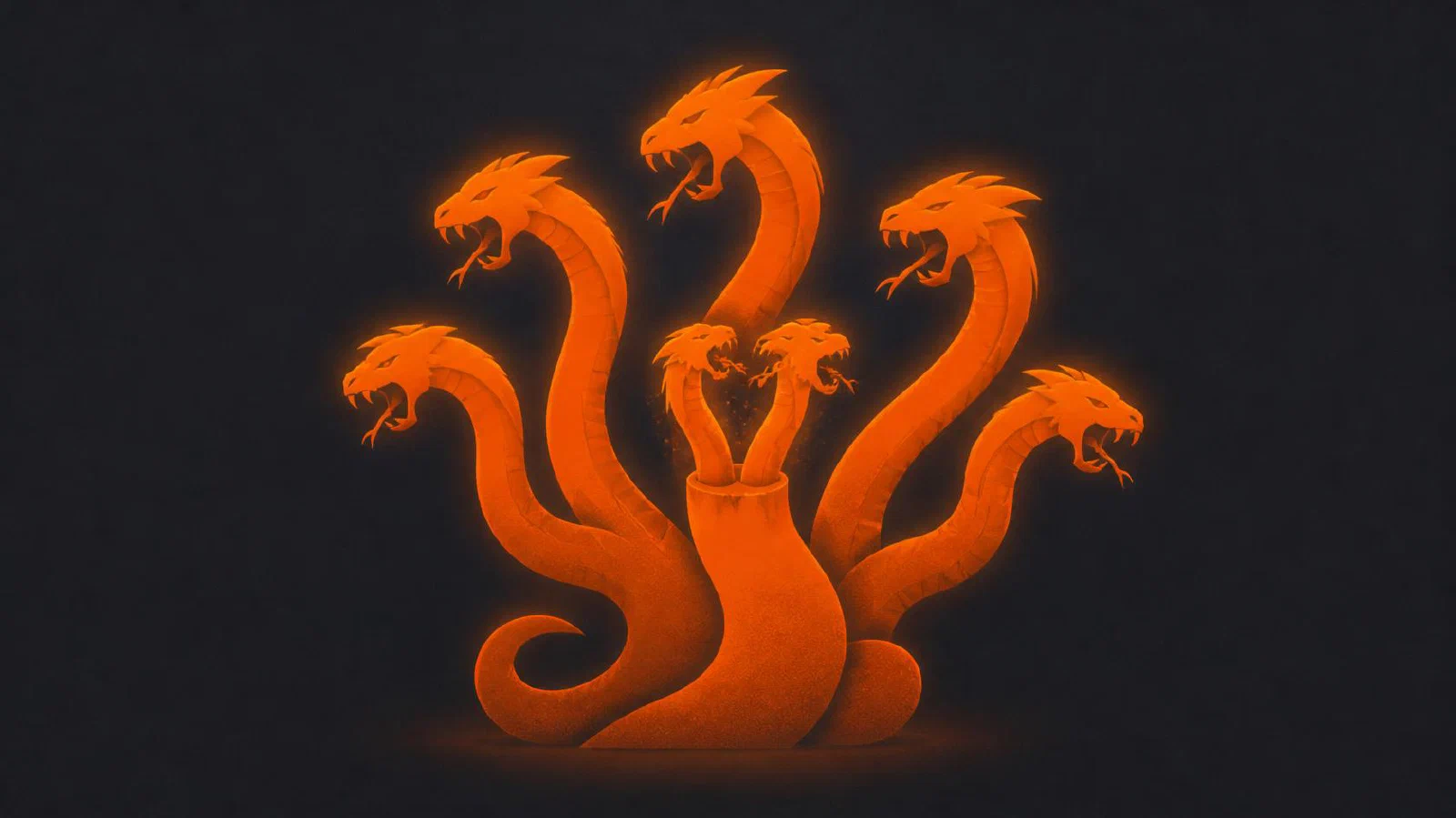
Taleb uses three mythological figures to explain the triad:
- Fragile — Damocles: lives with a sword hanging over his head by a single horsehair. One shock and it’s over.
- Resilient — Phoenix: dies and is reborn from its own ashes, but is reborn the same.
- Antifragile — Hydra: the serpent of Greek mythology: for every head cut off, two grow back. The attack makes it stronger.
Think of how many athletes you know who are Phoenixes: they lose, they suffer, they come back to training on Monday exactly the same. Resilient, yes. But the same loss will happen again at the next tournament, because nothing changed.
Hormesis: the dose makes the medicine
Antifragility doesn’t mean “the more suffering, the better”. Taleb relies on a concept from biology called hormesis: small doses of a stressor make the organism react and get stronger; doses that are too large, or continuous with no rest, break it.
Any coach knows this under another name: it’s the basic principle of training. Load, recovery, adaptation. The muscle doesn’t get stronger during the workout — it gets stronger afterwards, in recovery, as a response to the stress it went through. Without stress, there is no adaptation. Without recovery, there isn’t either.
And here comes the part many people ignore: depriving a system of stress also makes it fragile. The player who only does comfortable rallying, only plays people he already knows, only enters the tournament where he knows he’ll do well, is protecting himself — and getting more fragile every week.
The three players at the table
Picture the scene: fifth set, 8-9, you’re serving. Your opponent’s ball hits the edge of the table and goes off. 8-10.
The fragile player explodes. He complains about the edge, looks at his coach, slaps the racket against his thigh. The point is already over, but he keeps playing that point in his head. He serves fast, in a hurry, with no plan. 8-11. On the way home, it’s the edge’s fault, the ball’s, the table’s, the umpire’s, the new rubber’s.
The resilient player breathes, accepts it, goes back to his routine. He keeps his head up and plays the next point well. He may even turn it around. But, winning or losing, he leaves the match the way he came in.
The antifragile player does everything the resilient one does — and one more thing: he turns what happened into information. That edge teaches nothing (it’s luck, and luck can’t be trained). But the previous point did teach something: the opponent returned my short serve to the forehand with an aggressive flick (what Brazilians call a harau) twice in a row. So the next serve will be different. And after the match, win or lose, he leaves with a new note for Tuesday’s training.
Brazilians have a great expression for the fragile type: the “Gabriela syndrome” — from a famous song by Dorival Caymmi, for people who think they were born one way and will die that way (“I was born like this, I grew up like this, I’ll always be like this”). And there is also the antidote, sung by Raul Seixas: being a metamorfose ambulante, a “walking metamorphosis”. The American psychologist Carol Dweck, of Stanford University, arrived at the same place by another path, researching how people deal with failure: in the book Mindset (2006), she separates the fixed mindset — “my talent is what it is” — from the growth mindset — “my talent is the starting point”. Gabriela is fixed mindset. Raul is growth mindset. Taleb goes one step further: the antifragile doesn’t just believe they can grow — they use stress as fuel for it.
Which level are you at today?
Read the table below honestly. There is no pretty answer: most of us are fragile on some lines and antifragile on others. The goal is to know where you stand, so you know what to train.
| Situation | Fragile | Resilient | Antifragile |
|---|---|---|---|
| Training | Prefers what he already knows how to do; avoids drills where he makes many mistakes | Completes the proposed training with discipline | Looks for the drill that exposes the weak spot |
| Uncomfortable opponent (pips, chopper, left-hander) | Avoids; “I don’t like playing against that” | Plays when he has to, no drama | Asks to train against it |
| Net and edge | Complains, gestures, carries it into the next point | Accepts it and moves on | Accepts it and moves on — luck isn’t analyzed |
| Your own bad point | Berates himself out loud; the mistake lasts several points | Returns to the routine quickly | Returns to the routine and extracts information from the mistake |
| Opponent’s good point | Gets rattled, changes the plan in desperation | Acknowledges it and keeps the plan | Asks “what is he seeing that I’m not?” |
| Defeat | Blames something external (table, ball, umpire, equipment) | Accepts it, rests and comes back the same | Leaves with 1 or 2 concrete adjustments for training |
| Equipment | Changes rubber after every loss | Keeps the equipment | Keeps the equipment and only adjusts with a reason and a deadline |
| Between points | Serves fast, with no plan; the heart races | Has a routine and follows it | Uses the routine to read the game and decide the next point |
| Inner voice | “It’s not working”, “today’s not my day” | “Calm down, next point” | “What did that point teach me?” |
Tip
If most of your answers landed in the first column, start with the basics: a between-points routine and stop changing equipment. If they landed in the second, you already have the foundation — the next step is turning every match into data. If they landed in the third, watch out for the trap in the next section: even the antifragile can get hurt by too much intervention.
Between points: where antifragility really happens
All the reasoning above fits into 8 to 10 seconds. That is roughly the average time between one point and the next in a match — and it is there, not during the rally, that it’s decided whether you’ll be Damocles, Phoenix or Hydra on the next point.
In the post Your heart lost the point, I talked about the physiological side of this: how a racing heart steals decision-making clarity, and how breathing between points helps you regain control. Here, I want to show the other side: the mental structure of those seconds.
The model I use with my athletes — adapted for our table tennis — comes from the work of Hungarian-American Dora Kurimay, a former player and sports psychology specialist, in the book Get Your Game Face On Like the Pros!, which in turn draws on the research of psychologist Jim Loehr with professional tennis players. It has four steps, the 4 R’s:
- Reaction — the first 3 seconds after the point ends. Firm posture, head up, no “celebrating the lost point”.
- Recovery — breathe, step away from the table, drop your shoulders. Give your body and your head a real pause.
- Readiness — two questions: What is the situation? What is my job? Which serve, where, and what I do after it.
- Ritual — the fixed gesture before serving or receiving, which tells the body: “now it counts”.
One reference I love from this method is the 80-10-10 rule for reaction: in 80% of points, a neutral reaction (anyone watching can’t tell whether you won or lost the point); in 10%, an energetic celebration on the points that change the momentum of the match; and in 10%, a defiant response after a mistake — a “let’s go!” that pulls you up, instead of a “how awful” that pulls you down.
Notice how the 4 R’s fit the triad. The fragile player jumps straight from the stimulus to the uncontrolled reaction. The resilient one masters Reaction and Recovery — he returns to normal. The antifragile uses Readiness to turn every point, even the lost ones, into information for the next.
Note
I have a much more complete material on this, which I use in talks and hand to my athletes, with exercises to build your personal between-points routine. It will become a post of its own soon.
Iatrogenics: when the remedy becomes the problem
Of all the concepts in the book, this is my favorite — and the one I see happening most in table tennis.
Iatrogenics is a word from medicine: the harm caused by the treatment itself. Taleb defines it as the harm from a treatment that exceeds its benefits. The classic example is bloodletting, which doctors used for centuries to treat almost everything and which, in many cases, killed the patient faster than the disease. Taleb extends the concept to any field: whenever someone intervenes in a system without knowing whether the benefit will outweigh the damage, they are practicing what he calls naive interventionism.
In table tennis, iatrogenics has a name, a surname and an address:
1. Changing equipment after every loss. It’s the most common case. The player loses a tournament, concludes that “the rubber isn’t working”, and switches. Three weeks later, still adapting, he loses again — and switches again. Technique and muscle memory take, on average, 60 to 90 days to adapt to new equipment. Whoever switches before that never gets to play adapted to anything. The treatment (the switch) became the disease (the inconsistency).
2. Tinkering with technique on the eve of a tournament. Fixing a stroke is necessary — but the week before a competition is the worst possible moment. The player goes into the match thinking about his elbow instead of thinking about his opponent.
3. The coach who corrects everything at once. I include myself here. The wish to help makes us point out ten things after a training session. The athlete can’t process ten things. One or two at a time, at most.
4. Volume without recovery. Training more is the automatic answer to any loss. But, as we saw with hormesis, stress without recovery doesn’t strengthen — it breaks.
5. Changing tactics after every lost point. It looks like flexibility, but it’s anxiety. Adjusting the plan because you read something in the game is one thing; abandoning the plan because you lost two points in a row is another.
Notice an apparent contradiction: in the previous section, I argued that the antifragile changes, adapts, moves on. Now I’m telling you not to touch anything. It’s not a contradiction.
Important
The antifragile changes based on information; the iatrogenic changes based on anxiety. The filter question is always: “am I changing because I learned something, or because I’m uncomfortable?”
Via negativa: improving by subtracting
Taleb defends an idea he calls via negativa: often, the way to improve is not to add something, but to take something away. When in doubt, don’t intervene.
Applied to the table, this becomes three practical rules:
- One change at a time. If you change the rubber, your backhand technique and your training time all at once, you’ll never know what worked.
- With a reason. Every change needs a motive you can explain in one sentence.
- With a deadline. Decide beforehand how long you’ll give the change — and don’t reassess before then.
And sometimes the best change is to stop doing something: stop berating yourself out loud, stop looking at the coach after every point, stop reading rubber forums every night.
Antifragile training: stress in the right dose
If hormesis says that small doses of stress make you stronger, training needs to have those doses — on purpose, controlled, with recovery afterwards. A few ideas I use:
- Start the set behind. Play sets where the opponent already starts with a 3 or 4 point lead. You train exactly the situation that scares you most in competition.
- Multiball with random placement. Instead of a predictable sequence, the feeder varies without warning: one or two balls in one spot, then another elsewhere. He decides the location; your brain learns to decide under uncertainty.
- Look for the style you hate. Pips players, choppers, left-handers, blockers. If you avoid it, it becomes your Damocles.
- Vary the conditions. A different table, a different hall, a different ball brand. The fragile depends on ideal conditions; the antifragile gets used to not having them.
- Play points that count at the end of training, tired. A controlled dose of the fatigue you’ll feel in the fifth set.
- Treat competition as a dose, not as a final exam. Every tournament is a stressor that brings information. The result matters, but what you learn from it matters more.
And remember: after the dose, recovery. Sleep, rest, hydrate, eat well. That’s where adaptation happens.
Waldner, Manchester, 1997
In my 2021 text, I said Jan-Ove Waldner had been “crushed” in the team event at the 1997 World Championships in Manchester, and then became champion in the singles. I researched it again for this rewrite — and the real story is even better.
A parenthesis: you’ve probably noticed I quote Waldner a lot — and there’s a reason. Table tennis is divided into before and after him. If you never saw him play, I can only feel sorry for you.
Waldner’s Sweden had been three-time world team champion in 1989, 1991 and 1993, and runner-up in 1995, losing the final to China. In Manchester, the campaign fell apart early: in the group stage, Sweden lost to Belgium, with Waldner beaten by Philippe Saive in the deciding game. In the quarterfinals, they fell to China — even with Waldner beating Kong Linghui. For the first time in years, Sweden went home without a team medal.
And it didn’t stop there: in the doubles final, Waldner and Jörgen Persson lost to Kong Linghui and Liu Guoliang in five games.
At 31, with all of that on his back, Waldner entered the singles tournament and did something that had never been done at a World Championships and probably never will be again: he became champion without losing a single game. In the final, he beat Belarusian Vladimir Samsonov 21-12, 21-17, 21-13. It was his second world singles title, eight years after the first, in Dortmund.
That is not a Phoenix, reborn the same. That is a Hydra. And all of Sweden seems to have learned the lesson: three years later, in 2000, it became world team champion again.
Almost three decades later, the China of 2026 repeated the script, only from the other side of the table: it lost to South Korea and to Sweden itself in the group stage, finished third in the group for the first time in the modern era — and left London as champion, with Liang Jingkun turning around a 3-8 deficit in the deciding game of the final against Tomokazu Harimoto. I told that story in detail in the post about the antifragile China.
But Auad, what about SpongeBob?
Remember that Bob is a sea sponge, not a kitchen one?
The kitchen sponge is resilient: you squeeze it, it returns to its shape. Until the day it tears — and then it goes in the trash.
The sea sponge is another story. Marine sponges are animals, and they are among the living beings with the greatest regeneration capacity on the planet. If a piece breaks off, that piece can become a new sponge — the farmers who grow sponges at sea do exactly that: they cut pieces and let them grow. In 1907, the American biologist H. V. Wilson ran a famous experiment: he pressed a sponge through a fine cloth, separating it into loose cells, and watched those cells regroup and form a sponge again.
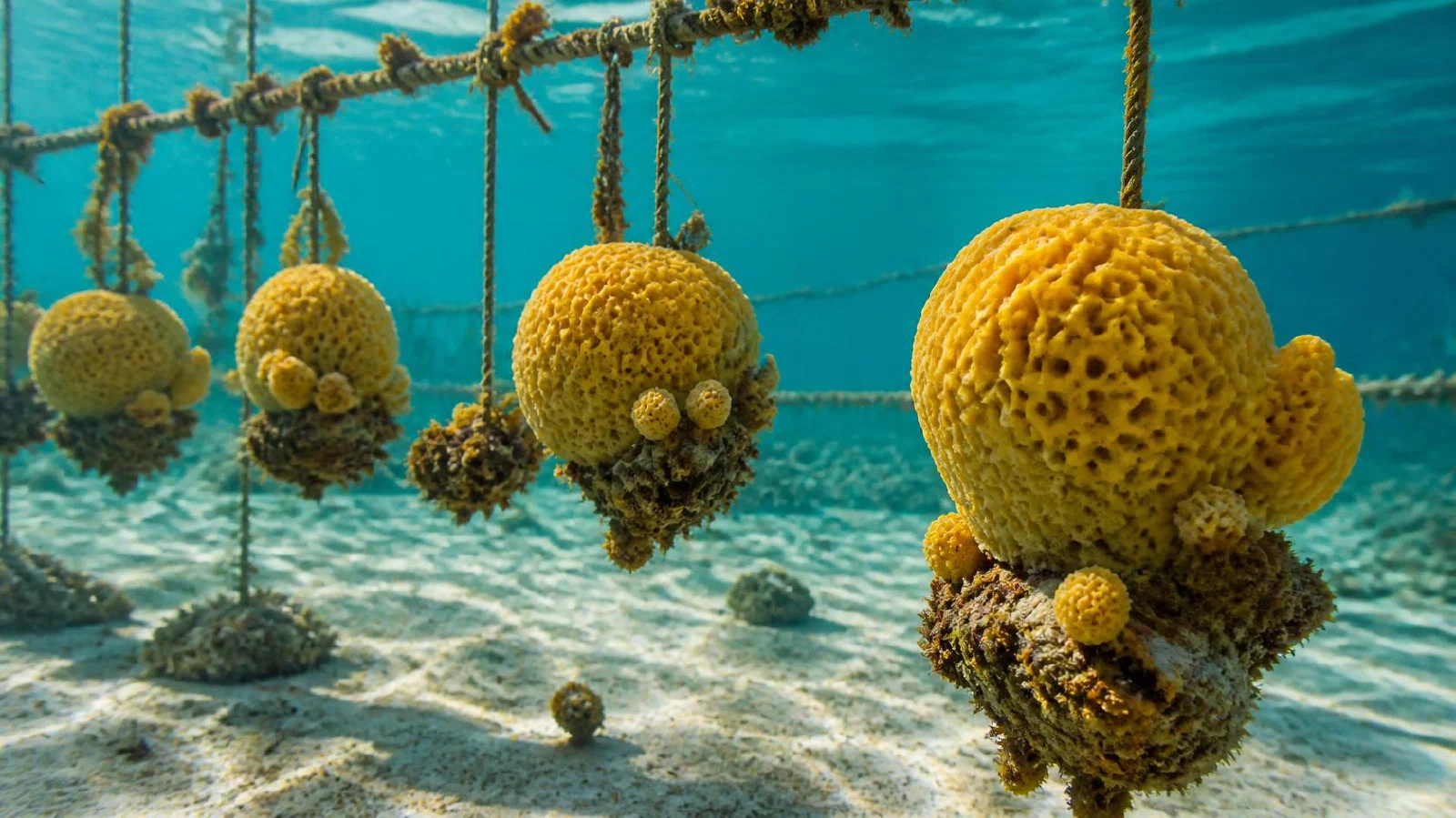
In other words: cut a sea sponge and you may end up with more sponges. That is Taleb’s Hydra, in real life, at the bottom of the sea.
And there’s one more detail I ignored in 2021: a sponge doesn’t just serve to return to its shape. A sponge absorbs. When it is squeezed, it lets go of what no longer serves — and gets ready to absorb again. That is exactly what the antifragile player does with every loss: squeezes, lets go of the frustration, the excuse and the blame on the edge, and absorbs what that match had to teach.
How about being a SpongeBob athlete — the real one, from the bottom of the sea? Or, if you prefer, a Hydra athlete: every loss cuts off a head, but what matters is how many grow back.
So, have you ever had a loss that you squeezed until you got a lesson out of it? Tell us in the comments — let’s swap ideas. I’ll read and answer every one.
antifragility · anti fragile · resilience · sponge bob · nassim taleb · black swan · growth mindset · mental game
Read also
The Antifragile China: From Chaos to the World Title
China lost twice in the group stage and still won the 2026 London title. See the comeback match by match and Taleb's concept of antifragility.

Your heart lost the point. And it wasn't nerves...
Lost the set with the right game plan? See how a racing heart costs you precision, and how a smartwatch and the breaks between points help you regain control.

Who Is the GOAT of Table Tennis? 100 Years of History and Magic
The ITTF released a documentary on its 100 years (1926-2026). See the Sweden, China and Brazil recap and find out who the coach picks as table tennis GOAT.
Comments
Comment with your account (email or Google). Every comment is reviewed before it appears.